
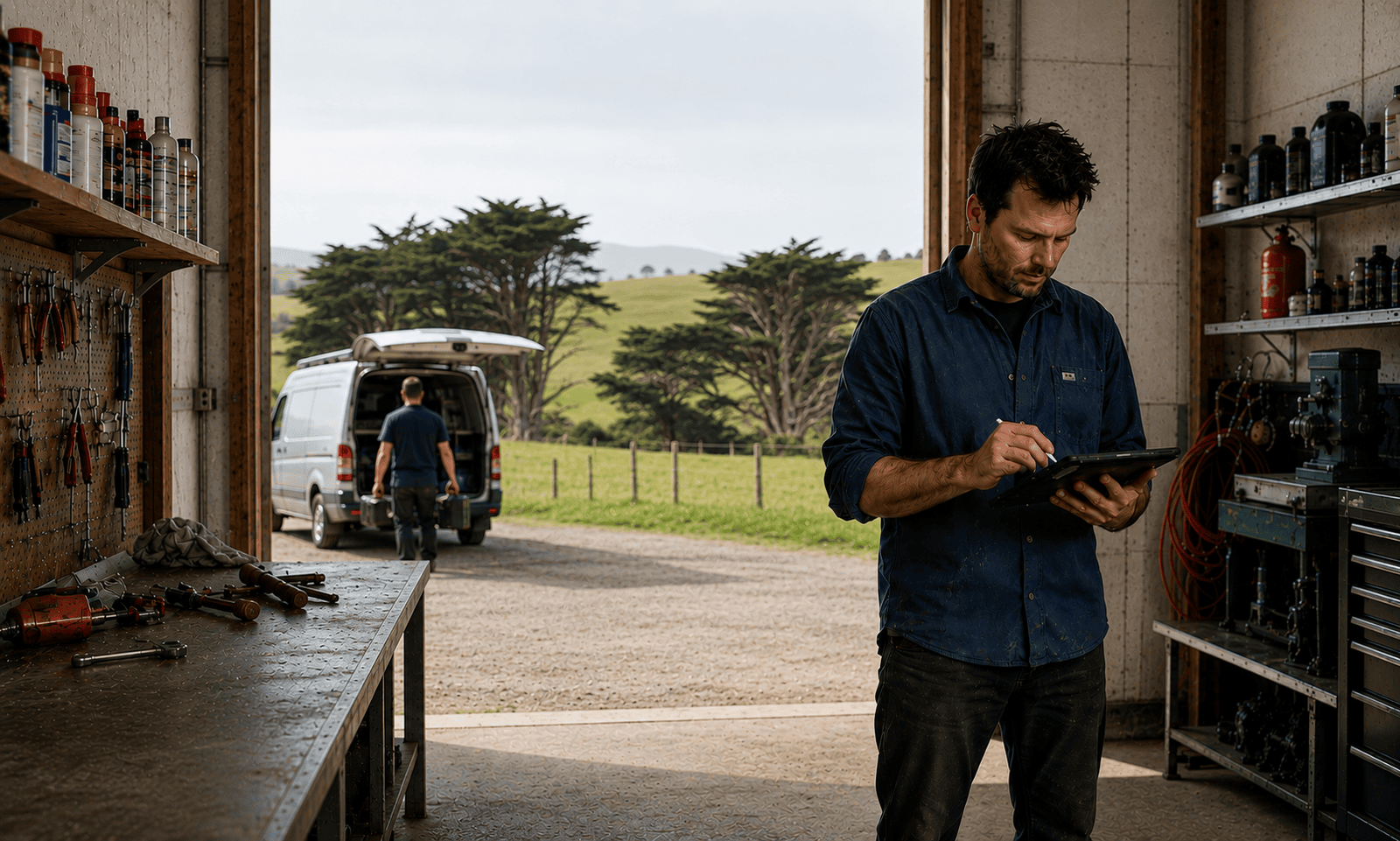
Business insurance often renews each year, but businesses rarely stay the same.
You might buy another vehicle, take on a bigger job, add equipment, start using subcontractors, rent out part of a property, introduce new software or add another income stream.
At the time, these feel like normal business decisions. Insurance is not always front of mind when you are focused on keeping work moving. But if those changes haven't been talked through with your adviser, your insurer may be working from an outdated picture of the business.
Recent Vero SME Insights research shows New Zealand businesses are facing pressure from increasing costs, economic uncertainty and regulatory change, while still needing to keep things moving. Earlier Vero New Zealand research also found many SMEs were not taking all the relevant factors into account at renewal, while almost half had made business changes in the previous year.
That feels very real for busy business owners. Decisions get made, the business keeps moving, and insurance often only gets attention at renewal time.
Below are five areas the HTL insurance team is seeing across property, business, rural and commercial insurance. If one of these sounds familiar, it may be worth checking whether your current cover still reflects how your business operates today.
1. Property that earns income my not be 'just a property'
A property owner may not think of themselves as running a business. But if a building, unit, shed or accommodation space earns income, there may be more to consider than the building itself.
That might be a building or property leased to another business, used as a retail or workshop space, rented as holiday-home or short-stay accommodation, used for worker accommodation, leased as storage, or being repaired or maintained by contractors.
This has come up recently in conversations HTL adviser Mariana Phillips has been having with property owners around property owner liability. For many owners, it is not always obvious why this matters, especially if claims in this area have not felt frequent.
Older buildings, maintenance and refurbishment work can add another layer, especially where contractors or public access are involved. WorkSafe notes that asbestos remains the number one cause of work-related death in New Zealand, with approximately 220 people dying from asbestos-related disease each year.
Talking it through helps your adviser understand how the property is actually being used day to day, not just that there is a building to insure.
If your property earns income, has tenants or guests, or involves contractors on site, raise it with your adviser so your insurance reflects the real use of the property.
2. One-off work can carry risk because it sits outside the usual routine
Some of the riskiest work a business takes on is not always the work it does every day. It might be a machinery move, a temporary setup, an unusual client request, a one-off job, or helping with something that sits slightly outside the usual scope of the business.
The HTL insurance team was recently discussing an insurer partner update about a fatal machinery move in Ōtorohanga. A team was moving a 1.84-tonne press brake into an engineering workshop when the machine fell and fatally crushed a worker. WorkSafe found the job had been poorly planned, with no task-specific risk assessment and unsuitable equipment used. Its message was that one-off or unusual jobs need to be treated differently from everyday work, with proper planning, suitable equipment and a clear understanding of who is responsible for what.
For contractors, workshops, rural operators, trades and small commercial businesses, the lesson is practical: experience in everyday work does not automatically make a one-off job low risk. From an insurance point of view, the detail matters. Is the activity part of the usual business? Who is responsible for it? Does the current insurance information clearly reflect that type of work.
If the work sits outside your usual day-to-day activity, it is worth checking that your adviser understands what is involved.
3. Trades and construction responsibilities are changing
For builders, trades, contractors and design professionals, the insurance conversation is increasingly about responsibility, not just tools, vehicles or public liability.
As jobs get larger, contracts become more detailed, or a business takes on design input, supervision, sign-off or subcontractor management, the risk picture can change.
There are also wider changes happening across the building and construction sector. MBIE says a voluntary self-certification scheme for plumbers and drainlayers is expected to commence later in 2026. The Government has also announced wider construction liability changes, including a move toward proportionate liability, mandatory home warranties for some residential building work, and professional indemnity requirements for design professionals.
For many businesses, the current cover may still be right. The important thing is making sure it matches the work being done, the contracts being signed and the responsibility being carried.
If your construction, trade or design business is taking on larger jobs, different contract terms, more subcontractors or more responsibility, talk to your adviser before the next renewal simply rolls over.
4. Rural, poultry and specialist operations may need a more detailed insurance conversation
Rural and specialist businesses often change gradually. A farm, orchard, grower or rural operation may add accommodation, contracting, poultry, processing, direct sales, new sheds, machinery or another income stream without feeling like it has become a different business.
But those changes can matter to an insurer. The operation may now involve different assets, activities, responsibilities, fire risks, access issues or business interruption considerations than it did when the cover was first arranged.
The more important point is making sure insurers have a clear picture of how the operation actually works today, not just how it looked when the policy was first set up.
If your operation has diversified, added buildings or machinery, introduced new income streams, or changed from the business your current cover was based on, it is worth talking it through with HTL.
5. Digital systems are now everyday business risk
Most businesses now use digital systems in some way: cloud accounting, online invoicing, job management software, customer records, payment systems, supplier portals or email. For many trades, rural, service and commercial businesses, those systems are central to cashflow and daily operations.
The National Cyber Security Centre reported 1,164 cyber incidents in the first quarter of 2026, with phishing and credential harvesting the most common category.
For everyday businesses, this can show up through invoice redirection, compromised email accounts, customer data exposure, payment issues or systems being unavailable when work needs to keep moving.
If online invoicing, payment systems, job software, customer records or supplier portals are now part of how your business operates, they should be part of the wider insurance conversation.
What this means for your business insurance
Business insurance is not just about what is listed on the renewal document. It depends on how your business actually operates, what has changed, and what your insurer needs to understand.
If the business has evolved but the insurance information has not, the same assumptions may keep carrying forward at renewal.
With insurer appetite, pricing and cover options continuing to shift, a good insurance conversation is not just about renewing what you already have. It is about making sure your adviser has the right information to explain your business clearly and explore suitable options. At HTL Group, our insurance advisers take the time to understand the real-world details of your business before looking at insurance options.
As a Member Broker of Insurance Advisernet New Zealand, HTL also has access to a broad insurance network and wider market capability. That can be useful where a business has grown, diversified, become harder to place, or no longer fits neatly into a standard policy option.
If your business has changed since your cover was first arranged, it is worth talking it through with us before the next renewal simply rolls over.
This article provides general information only and does not take into account your objectives, financial situation or needs. For advice specific to your circumstances, please speak with an HTL Group adviser.
